One Hundred Decibels of Deterrence: How to Choose an Attention-Getting Device That Actually Works
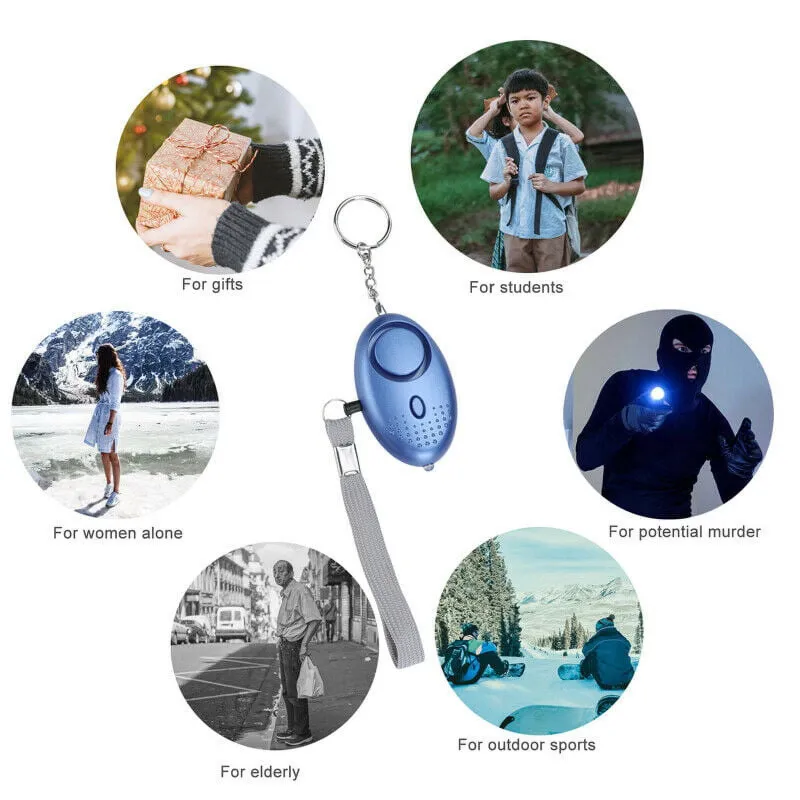
Photo: personal safety keychain alarm and whistle on table, via i5.walmartimages.com
Walk through any campus bookstore or scroll through a back-to-school shopping list and you will find them: small, inexpensive devices that promise to make a student impossible to ignore. A brass whistle. A keychain siren shaped like a cat. A pull-pin alarm clipped to a backpack zipper. Each claims to be a lifeline in a crisis, and each costs less than a takeout order.
The question is not whether making noise can help in an emergency. It almost always can. The question is which of these devices a frightened person, fumbling in the dark with adrenaline flooding their system, can actually deploy in time. That distinction matters more than any number on a product box.
Why Noise Works — and When It Doesn't
Sound is a deterrent because it violates an attacker's most basic requirement: control of the environment. A loud, sustained noise draws windows, phones, and attention. Most opportunistic crimes on and around American campuses are crimes of convenience, and convenience collapses the moment a scene becomes public.
But sound only helps if three conditions are met. The device must be loud enough to be heard at a useful distance. It must be distinguishable from ambient noise — a party, traffic, a crowded quad. And it must be reachable and activated within seconds, by someone whose hands are shaking.
Many popular products fail on that third condition, which rarely appears in the marketing.
Decibels Are Not the Whole Story
Manufacturers love decibel ratings, and the numbers sound impressive: 120 dB, 130 dB, even 140 dB. For context, a jet at takeoff sits around 130 dB, and anything above roughly 85 dB can damage hearing with sustained exposure.
These figures are typically measured at the source, in ideal conditions. Sound drops off fast — roughly 6 dB with every doubling of distance — and walls, rain, and crowd noise eat more. A 130 dB alarm heard from a block away through a closed window may register closer to a car horn. That can still be enough. But it means the difference between a 120 dB and a 140 dB device matters far less than the difference between a device you can activate and one you cannot.
The Contenders, Honestly Assessed
The classic pealess whistle. A quality pealess whistle — the kind designed for whitewater rescue, not a party favor — produces a piercing, shrill tone around 100–115 dB that carries remarkably well and reads unmistakably as distress. It cannot run out of battery, it works when wet, and it costs five dollars. Its weakness is human: it requires finding it, bringing it to your mouth, and blowing hard, which is several seconds of coordination under panic. Worn on a breakaway lanyard around the neck rather than buried in a bag, it becomes dramatically more usable.
The pull-pin or button keychain alarm. These battery-powered sirens typically claim 120–140 dB and produce an ugly, urgent blast that is difficult to ignore. The best models activate with a single motion — pulling a pin or pressing and holding one large button. The failure modes are batteries that die unnoticed and fiddly designs with tiny switches. If you choose one, pick a model with a test button and test it monthly. Treat the battery like a smoke detector battery, not a set-and-forget feature.
The wearable alarm. Clips, bracelets, and pendant-style alarms trade a little volume for constant accessibility. Because they live on your body rather than in a pocket, they are often the fastest to activate. For students who run, walk between buildings at night, or keep their hands full, this accessibility advantage frequently outweighs a few lost decibels.
What to avoid. Alarms that require finding a phone app first, devices with ambiguous activation (two buttons, a twist, a sequence), and novelty designs where the cute housing interferes with the mechanism. In an emergency, cute is a liability.
A Simple Field Test
Before trusting any device, run it through this checklist:
- The dark test. Activate it with your eyes closed and your hand in a pocket. If it takes more than three seconds, keep shopping.
- The distance test. Have a friend trigger it at the far end of a parking structure or across a quad. Could you tell it was a distress signal — not a car alarm or a dropped phone?
- The habit test. Attach it to something you carry every single day. A safety device left in a dorm drawer has a decibel rating of zero.
The Bottom Line
For under thirty dollars, a student can carry a pealess whistle on a lanyard plus a well-reviewed pull-pin keychain alarm with a fresh battery — a combination covering both the long-range, hands-free scenario and the close-range, one-motion scenario. Neither replaces situational awareness, a planned route, or a charged phone. But as the last link in a personal safety plan, a well-chosen noisemaker is among the highest-value purchases a family can make.
Loud, fast, and always within reach. That is the entire specification that matters.