Where the Campus Map Ends: A Parent's Field Guide to Judging an Off-Campus Neighborhood

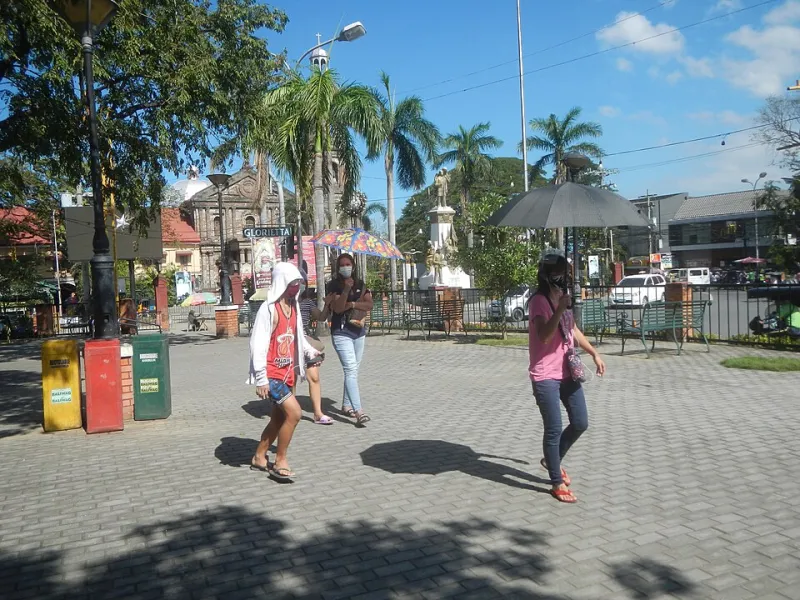
Photo: Knowledge and philosophy, CC BY-SA 4.0, via Wikimedia Commons
The Safety Perimeter Ends at the Property Line
Somewhere between sophomore and senior year, most American students make the leap: they trade a dorm key for a lease, a meal plan for a grocery run, and the well-lit quad for a sidewalk the university has no obligation to maintain. Parents often treat this as a housing decision. It is equally a safety decision — and it deserves the same scrutiny families give to roommates, rent, and room size.
Here is the uncomfortable arithmetic. A university's security infrastructure — campus police, card-access buildings, emergency phones mounted on poles — stops working the moment your student steps off university land. For upperclassmen, that means the majority of their daily movement happens in territory where no institution is watching. The good news: with a structured approach, families can evaluate an off-campus neighborhood with nearly the same rigor a university applies to its own grounds.
Start With the Data, But Read It Correctly
Every major US city publishes crime data, and third-party aggregators make it searchable by address. Parents should absolutely look — but raw numbers mislead without context.
- Look for trends, not totals. A neighborhood with twelve reported incidents in a month tells you little; twelve incidents that are all vehicle break-ins tell you a great deal. Property crime and violent crime carry very different implications for a student walking home at 10 p.m.
- Compare against the campus itself. Universities are required by the Clery Act to report crimes on and adjacent to campus. If the apartment complex sits two blocks east of a stretch with elevated incident counts, that block deserves a closer look.
- Check the time-of-day pattern. Many student-adjacent neighborhoods see incidents concentrated in late-night weekend hours around bar districts. A quiet Tuesday afternoon tells you nothing about a Thursday at 1 a.m.
- Ask the local police substation. In most mid-sized American cities, a community policing officer will speak candidly with a parent about a specific block. This is one of the most underused resources in the entire vetting process.
Walk the Block at the Hours That Matter
No dataset replaces a site visit — ideally at two times: midday, when you'll see the neighborhood's ordinary rhythm, and after 9 p.m., when you'll see what your student will actually face walking home from a late study session.
On the evening visit, evaluate three things methodically:
Lighting. Walk the exact route from the bus stop or parking area to the front door. Look for gaps — the half-block between streetlights, the stairwell with a burned-out bulb, the alley shortcut students will inevitably take. Note whether the lighting is warm and consistent or patchy and shadowed.
Sightlines and activity. Streets with steady foot traffic, open storefronts, and occupied porches are statistically safer than streets lined with blank walls and boarded windows. An empty block is not a peaceful block.
Escape routes. If something felt wrong on this walk, where would your student go? An open convenience store, a busy intersection, a neighbor's porch. A route with no options is a route to avoid.
Interrogate the Landlord Like You'd Interrogate a Car Dealer
Most landlords will volunteer nothing about security; most will answer direct questions honestly enough. Ask all of the following before signing:
- Are exterior doors to the building key-fob or code controlled, or does anyone off the street walk in?
- Are stairwells, laundry rooms, and parking areas lit and on camera?
- How quickly are broken locks, lights, and gates repaired — and is there a written response window in the lease?
- Is individual unit access reinforced, or does a standard builder-grade deadbolt on a hollow door suffice?
- What is the parking situation? A lot two blocks away effectively doubles the walk a student makes after dark.
A landlord who bristles at these questions is telling you something. A landlord who answers with specifics — camera coverage here, lighting upgrades scheduled for March — is telling you something too.
Do Not Forget the Transit Equation
Students without cars depend on bus stops, rideshares, and bicycles, and each carries its own risk profile. Is the bus stop lit, visible, and close to the unit? Is there a safe place to stage and lock a bike? Does the rideshare drop-off point put the student on a dark sidewalk or at the front door? Map the full door-to-door journey, not just the address-to-address one.
The Checklist You Can Bring to the Showing
Print this and take it along:
- Crime data reviewed for the past 12 months, filtered by type and hour
- Evening walk of the full home-to-transit route completed
- Lighting gaps noted and photographed
- Building access control verified in person
- Landlord security questions asked and answers documented
- Nearest 24-hour safe harbor (store, gas station, populated business) identified
- Transit and rideshare drop-off points assessed
- Local police substation consulted
Closing the Gap That Infrastructure Can't
Even the best-vetted neighborhood will have gaps: an unlit stretch, a delayed bus, a parking lot at the edge of the map. Universities solve this on their own property with layers — patrols, lighting, emergency phones. Off campus, those layers have to be carried personally.
That is the practical case for quality personal safety gear. A reliable personal alarm gives a student a way to draw attention in the seconds that matter. A high-powered flashlight transforms a dark walk and doubles as a visibility tool. Pepper spray, where legal, adds a non-lethal layer of response. A door-reinforcement kit can harden an apartment entry the landlord won't. None of these replace good neighborhood choices — but together they form the portable safety perimeter that follows your student past the property line, onto the bus, and up the stairs of a building no one else is watching.
The lease will specify the square footage. The safety plan is the part families have to write themselves.