Nine Months With a Stranger: Closing the Roommate Vetting Gap Before Move-In
Photo: University of Texas at Arlington Photograph Collection, CC BY 4.0, via Wikimedia Commons
Every August, thousands of American families load minivans with plastic bins and mini-fridges, drive to campus, and hand a student's living situation over to chance. Housing departments match roommates using lifestyle questionnaires — sleep schedules, study habits, maybe a preferred music genre — and then offer almost nothing in the way of safety guidance. Yet the person behind that thin dorm door will share roughly nine months of space, belongings, and foot traffic with your student.
That disconnect is what we call the roommate vetting gap, and closing it doesn't require paranoia. It requires a process.
Why the Gap Exists
Universities operate on volume. With thousands of incoming students, housing offices prioritize logistics over due diligence. Background checks for residents are rare, and liability concerns often discourage schools from commenting on individual students at all. The result: the institution that knows the most about your roommate is legally positioned to tell you the least.
Parents frequently assume the school "wouldn't put anyone risky" in the dorms. That assumption deserves scrutiny. Most roommate problems are mundane — poor hygiene, noise, borrowed items — but a minority involve theft, unauthorized guests, or behavior that erodes a student's sense of security. A brief vetting effort costs a few hours; skipping it can cost a semester.
Step One: Do the Digital Homework
Once a housing assignment drops — often in June or July — students have a name and, usually, a school email address. That's enough to begin.
- Public social media review. A quick look at public profiles can reveal lifestyle red flags: frequent parties in posted photos, weapons displayed casually, or language suggesting hostility. Keep it to public information; resist the urge to friend-request before meeting.
- A simple introduction message. A short, friendly email or text — "Hi, I'm your roommate for fall, looking forward to meeting you" — opens a channel and shows you how the person communicates.
- A video or phone call. Fifteen minutes of conversation tells you more than any questionnaire. Ask about guests, cleanliness standards, and daily routines directly. Awkward now beats awkward in October.
Parents can participate in this stage, but the student should lead. The relationship is theirs to manage.
When to Consider a Background Check
For off-campus housing especially, a basic public records search is reasonable and, in most cases, inexpensive. County court records are often searchable online, and commercial screening services can surface criminal history for a modest fee. A few cautions apply:
- Never use information found this way to harass or publicly accuse anyone.
- Understand that records can be incomplete or contain errors.
- For minors and most college-age students, a clean record is the norm — the search is about confirming, not discovering.
If a search does surface something concerning, the appropriate next step is a conversation with the housing office, not a confrontation in the hallway.
Put the Agreement in Writing
The single most effective tool for shared-living safety costs nothing: a written roommate agreement. Keep it to one page and cover the essentials.
- Guests. Overnight visitors require advance notice from both parties. Unannounced strangers in a shared room are the most common security complaint in residence halls.
- Locks and keys. Doors stay locked, always — even during quick bathroom trips. No propping exterior doors, no lending keys or keycards.
- Belongings. Valuables stay locked in a drawer, safe, or lockbox. Lending policies are stated explicitly.
- Shared responsibilities. Cleaning schedules, quiet hours, and who pays for what.
Revisit the agreement after the first month, when real habits have replaced assumptions.
Gear That Supports the Agreement
A written understanding works best alongside a few physical safeguards, all of which fit comfortably in a move-in checklist:
- A dorm-safe personal safe or lockbox sized for a laptop, passport, and spare cash.
- A door wedge alarm or portable door lock for added security while sleeping or in older rooms with finicky locks.
- A small safe personal alarm clipped to a backpack for walking between buildings at night.
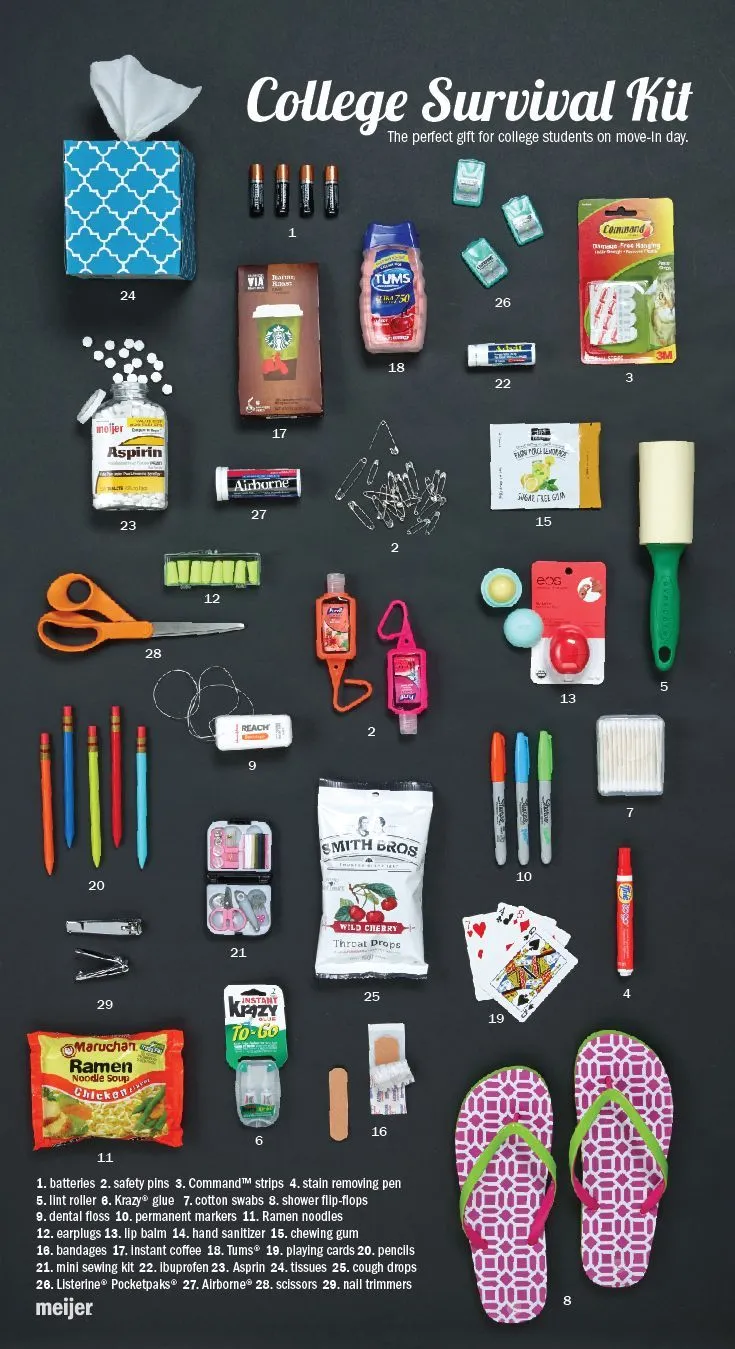
- A basic first-aid kit, because shared kitchens and unfamiliar cooking produce predictable results.
None of these signal distrust of a roommate. They signal that the student takes their own security seriously — which, conveniently, tends to set the tone for the whole room.
The Candid Take
Colleges hand out housing assignments the way airlines hand out seat numbers: efficiently, impersonally, and with no vetting conversation. Families who treat a roommate match as a hiring decision — reference check, interview, written terms — are simply compensating for an institutional blind spot.
Move-in day will come whether or not you've prepared. The student who arrives with a signed agreement, a locked drawer, and a working line of communication with their roommate starts the year with something no orientation speech provides: genuine peace of mind.