When the Group Chat Becomes the Safety Net: What Student-Led Networks Get Right — and Where They Fall Short

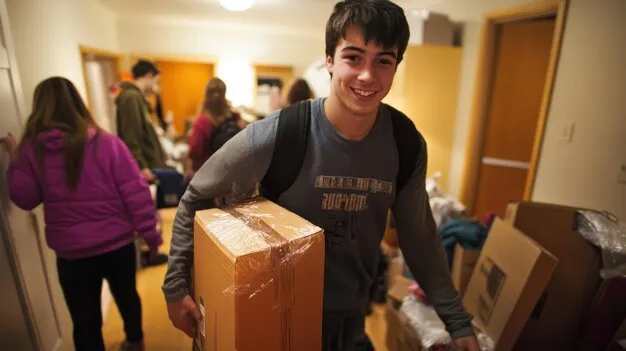
Photo: Judgefloro, CC0, via Wikimedia Commons
On a Tuesday night at a large public university in the Midwest, a student walking home from the library posts in a 400-member group chat: walking back from the engineering building, anyone else headed north? Within a minute, two classmates confirm they're on the same route. A fourth, already home, replies that she'll keep her phone handy until they arrive.
No administrator designed this system. No student government passed a resolution. It simply emerged — the way informal safety networks always have, only now running on group chats, location-sharing apps, and shared maps instead of hallway shouts and dorm floor meetings.
Campus safety professionals have noticed. And while many applaud the instinct, they're increasingly candid about where these organic systems break down.
The Rise of Digital Neighborliness
The shift is partly generational and partly practical. Official campus escort services — the blue-light call boxes, the security golf carts, the late-night shuttle — remain underused on many campuses, sometimes because students don't know they exist, sometimes because calling feels like an admission that something is wrong.
Peer networks carry no such stigma. A shared live location with three trusted friends is normal behavior for a generation raised on Find My and Snapchat's map. Student leaders describe a kind of ambient accountability: someone always roughly knows where you are.
"What we're seeing is students recreating the village," says one campus safety coordinator at a private university in the Northeast, who asked to speak generally about her institution's programs. "The problem is that villages had elders. They had structure. A group chat has vibes."
What These Networks Do Well
Credit where it's due — student-built systems solve real problems that formal programs historically haven't:
- Low friction. Asking a friend to virtually walk you home takes ten seconds. Requesting a formal escort requires a phone call, a wait, and a conversation with a stranger.
- Redundancy. In a well-run group chat, multiple people track a late-night walk. If one person falls asleep, another notices.
- Local knowledge. Students know which path floods, which shortcut has broken lighting, which parking lot feels unsafe in February. That intelligence rarely makes it into official safety bulletins.
- Speed. Concerns spread through peer channels faster than through any alert system.
These are genuine safety assets, and safety coordinators who dismiss them are fighting the last war. The smarter move — and the one a growing number of departments are taking — is to work with these networks rather than around them.
Where the Gaps Appear
The weaknesses, however, are structural, and students tend to discover them the hard way.
Notification fatigue. Location sharing that's always on eventually gets muted. The friend who was supposed to be watching your dot home stopped looking at the map three weeks ago.
The bystander diffusion problem. In a 400-member chat, responsibility blurs. Everyone assumes someone else responded. Research on bystander intervention applies to group chats as much as to street corners.
No escalation path. A peer network is excellent at noticing trouble and often poor at responding to it. What happens when the person walking home stops answering? Who calls campus police, and how quickly? Informal systems rarely have an answer, because no one was ever assigned one.
Coverage inequity. The students most plugged into these networks tend to be sophomores through seniors with established friend groups. First-year students, transfer students, and commuters — statistically among the most vulnerable populations on any campus — are often outside the chat entirely.
Privacy and consent drift. Location sharing that begins as optional convenience can harden into social expectation, and students who opt out can be unfairly read as paranoid or untrustworthy.
Blending the Two Systems
The coordinators and student leaders we spoke with converge on a similar playbook: treat the group chat as a layer, not the foundation.
Designate, don't assume. Effective student networks rotate a "night lead" — one person explicitly responsible for confirming everyone made it home. It's a two-minute job that eliminates diffusion of responsibility.
Build an escalation script. If someone goes quiet, the protocol is simple: text, then call, then contact campus police or 911 with a last-known location. Writing this down — even pinning it in the chat — converts good intentions into a repeatable procedure.
Layer in proven tools. Digital watchfulness pairs well with physical preparedness. A personal alarm on a keychain, a flashlight that doubles as a striking tool, a charged power bank for the phone that powers the whole network — these are the quiet complements to a live location dot. The strongest safety plans treat gear and community as the same system.
Bridge to official resources. Some campuses now run training sessions for student organizations on exactly this: how to run a peer walk program responsibly, when to loop in campus safety, what information dispatch actually needs. A handful of departments have even created liaison roles — a sworn officer or coordinator who joins student chats' leadership channels without monitoring the conversations themselves.
Recruit deliberately. Student leaders who want inclusive networks actively onboard first-year and commuter students at orientation, rather than letting the chat grow by accident.
The Takeaway for Students and Parents
For parents evaluating a school's safety culture, the informal layer matters as much as the official one. Ask your student: Is there a group chat where people coordinate late-night walks? Does anyone have a defined role? What happens if someone doesn't check in?
If the answers are confident and specific, your student is part of something valuable. If they're vague, that's not a reason to panic — it's a to-do list.
The group chat is not going to replace the campus escort service, and it shouldn't. But the students building these networks have identified something officials often miss: safety works best when it feels like friendship rather than procedure. The task now is to give that instinct the structure it deserves — clear roles, clear escalation paths, and gear that works when the Wi-Fi doesn't.
Digital neighborliness is a genuine asset. It just works better with a plan behind it.