Drop-Off Day, Reimagined: Turning the Campus Safety Talk Into a Conversation Both Sides Actually Want to Have

Photo: Paramount Pictures / Nickelodeon Movies, Public domain, via Wikimedia Commons
Every August, somewhere in America, a parent delivers the same speech in a packed minivan outside a freshman dorm: call me, text me, be careful, don't walk alone at night. And every August, a student nods along while mentally rehearsing their dorm room setup, hearing roughly every third word. It is not that either party cares less. It is that the format of the conversation — a one-way lecture delivered at the last possible moment — was designed for a parent's peace of mind, not a student's actual preparedness.
There is a better way to handle this annual ritual, and it starts with a simple reframe: safety on campus is not something parents hand down. It is something families build together, before the car is unpacked and the goodbyes get awkward.
Why the Old Script Fails
The traditional safety talk suffers from three structural problems. First, timing: it usually happens in the final hour before separation, when emotions are high and retention is low. Second, tone: 'be careful' is an instruction, not a plan, and young adults tune out instructions the way they tune out spam calls. Third, completeness: the lecture tends to cover the fears parents find easiest to articulate — walking alone, strange parties — while skipping the practical infrastructure that actually makes students safer, like knowing where the campus escort service operates or which phone number connects to the university police rather than a generic 911 queue.
Students notice these gaps. Most incoming freshmen have already downloaded a location-sharing app or scoped out the well-lit walking routes on their campus map. What they often lack is a parent who knows those details too — and can reinforce them without hovering.
The Two-Way Checklist
The fix is a conversation with two columns. Parents bring one set of items; students bring another. Neither column works alone, and reviewing them together turns a lecture into a negotiation — which, for most eighteen-year-olds, is a far more comfortable format.
The parent column:
- A confirmed emergency contact list, including both campus police and local police non-emergency numbers saved in the student's phone.
- A agreed-upon check-in rhythm — a weekly call, a nightly text, whatever both parties can genuinely sustain.
- An honest conversation about money for emergencies, including whether a rideshare stipend exists for nights when walking is a bad idea.
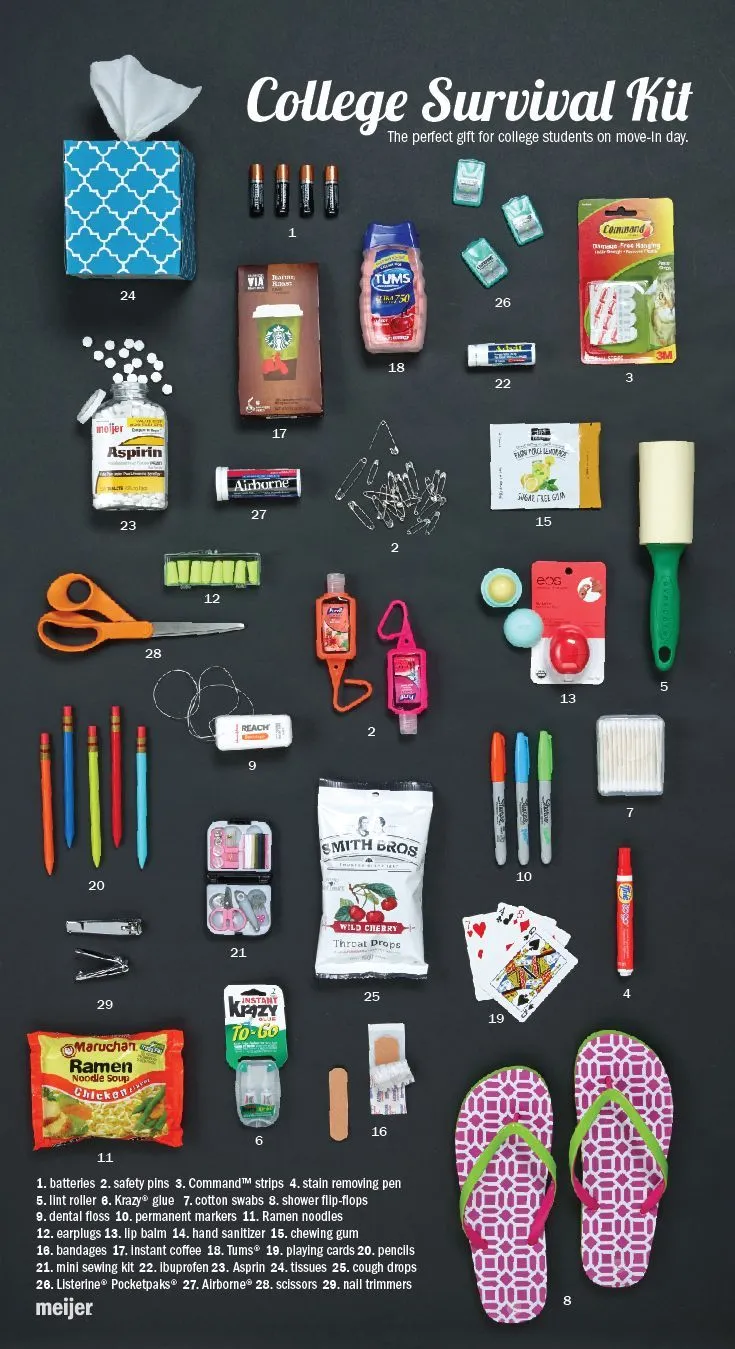
- A gear review. This is where the gift-giving moment lives: a personal alarm, a doorstop alarm for the dorm, a flashlight that doubles as a strobe. Framing protective gear as a send-off gift rather than a lecture prop changes how it is received — and whether it gets carried.
The student column:
- The campus resources they have actually researched: escort services, blue-light emergency phones, the walking routes they plan to use after dark.
- The apps already on their phone — location sharing with family, the university's own safety app if one exists.
- The boundaries they want to set. This is the column parents most often skip, and it matters: students need to state, in their own words, what independence looks like for them, and what would feel like an unacceptable invasion.
- A commitment to practice. A personal alarm in a drawer protects no one. One attached to a keychain, tested once, becomes muscle memory.
Gear as a Gesture, Not a Gimmick
Parents sometimes hesitate to buy protective equipment for fear of sending the wrong message — as if a doorstop alarm implies the campus is dangerous, or a keychain alarm signals distrust. In practice, students read these objects differently. A well-chosen piece of gear says I thought about your daily routine, which is a far more intimate message than be careful.
The strongest choices are the ones that fit invisibly into a student's existing habits: a personal alarm clipped to a backpack zipper, a compact flashlight in the jacket pocket that comes out every evening anyway, a doorstop alarm that takes ten seconds to deploy in any dorm or off-campus apartment. None of these require the student to change their behavior. That is the entire point — the best safety gear is the kind that gets used because it is already in hand.
Before the Car Is Packed
The single most effective change families can make is scheduling the conversation for early August rather than move-in day. A month of lead time lets students research their campus resources, test any gear, and push back on anything that feels off — all before the emotional weight of goodbye compresses the discussion into a hug and a wave.
Drop-off season will always carry a certain ache. But the safety talk does not have to be a monologue delivered through a rolled-down car window. Handled as a two-way checklist, it becomes something rarer: a shared plan, built by two adults, that both parties will actually remember in October.
That is worth an hour in early August. It may be the most practical gift a family exchanges all semester.